Avison Young Called Stabilization at Mid-Year. Then Came the Tariffs.
The Bank of Canada's policy rate sits at 3.75% as of July 2026, and for the first time in nearly three years, buyers and sellers of commercial properties have started agreeing on what buildings are actually worth. That alignment, according to Avison Young's mid-year assessment, marks the end of a valuation stalemate that froze most deal flow through 2024 and 2025. Then the White House announced new tariffs.
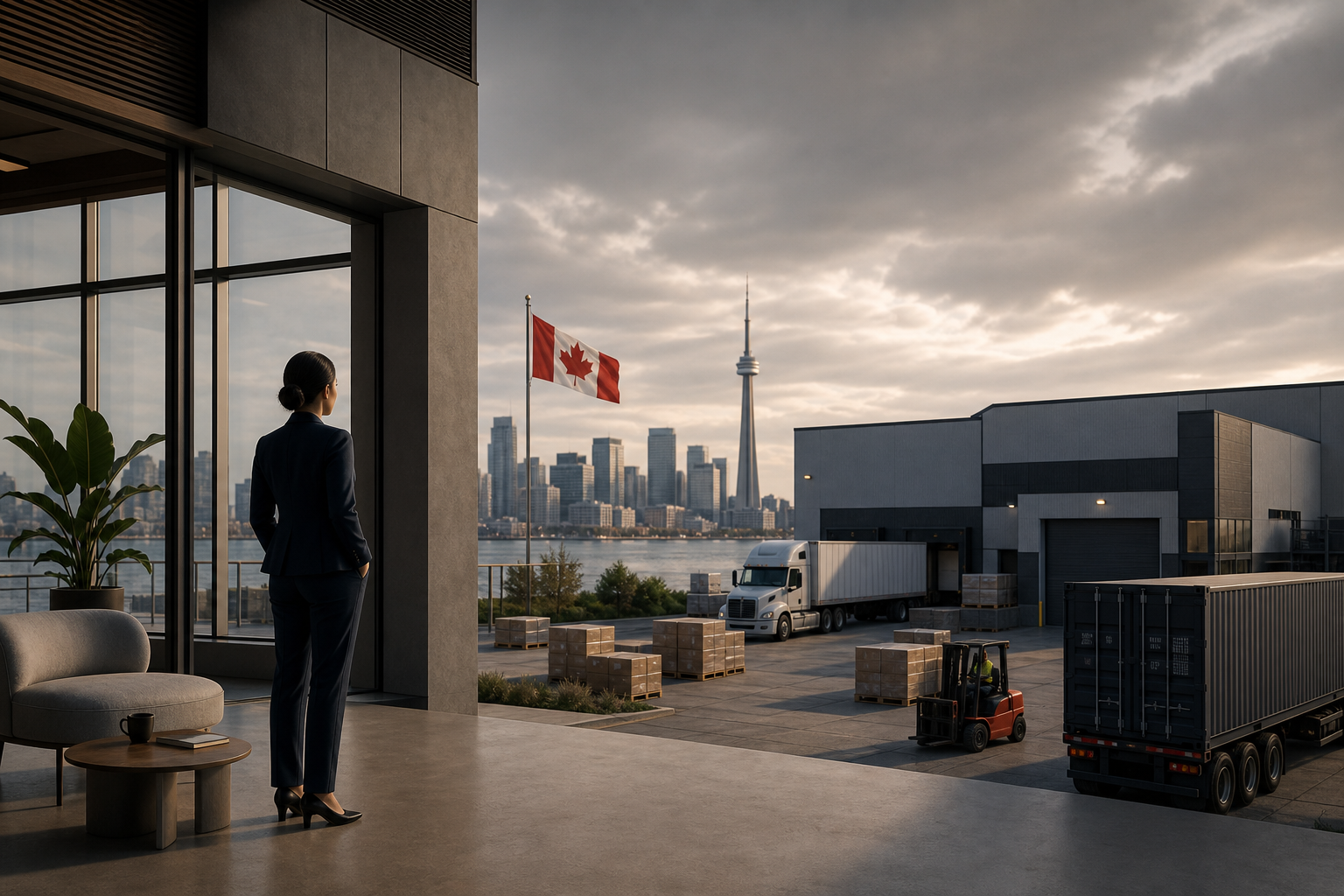
The timing matters. Canada's commercial real estate market doesn't operate in isolation from cross-border trade. Industrial assets, distribution centers, manufacturing facilities, logistics hubs near the border, depend on the smooth movement of goods between Canadian suppliers and American buyers. Tariffs change the cost structure overnight. A warehouse in Mississauga that penciled out at a 5.2% cap rate when cross-border shipping was predictable starts looking riskier when tariff schedules shift every six months.
The Stabilization That Almost Was
Stabilization in this context doesn't mean a return to 2019 pricing. It means the gap between what sellers wanted and what buyers would pay finally closed. Office vacancy rates are still elevated, hovering near 18% nationally, but they've stopped climbing. That plateau matters. For two years, landlords held onto properties hoping vacancy would reverse. It didn't. By mid-2026, enough of them accepted the new baseline that transactions resumed.
Industrial held up better. Demand for logistics space in the Greater Toronto Area and Greater Vancouver Area kept cap rates in the 5.0% to 5.5% range, only modestly wider than pre-pandemic levels. Land-heavy assets, sites where you could expand warehousing or add cold storage, commanded premiums. The stabilization Avison Young flagged was real in that sector. Until tariffs entered the equation.
The Refinancing Wall Nobody Wants to Discuss
A chunk of CRE debt issued between 2020 and 2021 is coming due in 2026 and 2027. Owners who locked in rates below 2% now face renewals at 4% to 5%, sometimes higher if the property's cash flow deteriorated. Stability, for many of them, means successfully navigating that refinancing hurdle without defaulting. It doesn't mean capital appreciation. It means survival.
The enthusiasm Avison Young referenced in Q1, when the Bank of Canada's easing cycle first took hold, has given way to something more cautious. Investors are pricing in risk they weren't pricing in six months ago. Part of that is macroeconomic: GDP growth is slowing. Part of it is structural: hybrid work isn't going away, which means office demand won't return to 2019 levels no matter how long we wait.
And part of it, now, is geopolitical. Tariffs don't just raise costs. They create uncertainty. An industrial tenant considering a 10-year lease for a cross-border distribution facility has to model scenarios where tariffs double, disappear, or morph into something else entirely. That uncertainty shows up in leasing velocity, which shows up in landlord cash flow, which shows up in valuations.
What Stabilization Actually Costs
The Canadian CRE market isn't uniform. Calgary and Edmonton, driven by energy sector activity, stabilized differently than Kitchener-Waterloo, where tech layoffs left office space empty. The headline "stabilization" masks regional divergence that matters more than the national average.
Tariffs will hit those regions unevenly. Manufacturing-heavy zones near Windsor or Sarnia face different exposure than Vancouver's port-adjacent industrial belt. The lag time is the real danger. Tariff impacts don't show up in CRE data for two to four quarters because industrial leases are long-term commitments. By the time vacancy ticks up or renewal rates soften, the damage is already done.
Avison Young called it right at mid-year. The market had stabilized. Past tense.


The Bank of Canada's policy rate sits at 3.75% as of July 2026, and for the first time in nearly three years, buyers and sellers of commercial properties have started agreeing on what buildings are actually worth. That alignment, according to Avison Young's mid-year assessment, marks the end of a valuation stalemate that froze most deal flow through 2024 and 2025. Then the White House announced new tariffs.
The timing matters. Canada's commercial real estate market doesn't operate in isolation from cross-border trade. Industrial assets, distribution centers, manufacturing facilities, logistics hubs near the border, depend on the smooth movement of goods between Canadian suppliers and American buyers. Tariffs change the cost structure overnight. A warehouse in Mississauga that penciled out at a 5.2% cap rate when cross-border shipping was predictable starts looking riskier when tariff schedules shift every six months.
The Stabilization That Almost Was
Stabilization in this context doesn't mean a return to 2019 pricing. It means the gap between what sellers wanted and what buyers would pay finally closed. Office vacancy rates are still elevated, hovering near 18% nationally, but they've stopped climbing. That plateau matters. For two years, landlords held onto properties hoping vacancy would reverse. It didn't. By mid-2026, enough of them accepted the new baseline that transactions resumed.
Industrial held up better. Demand for logistics space in the Greater Toronto Area and Greater Vancouver Area kept cap rates in the 5.0% to 5.5% range, only modestly wider than pre-pandemic levels. Land-heavy assets, sites where you could expand warehousing or add cold storage, commanded premiums. The stabilization Avison Young flagged was real in that sector. Until tariffs entered the equation.
The Refinancing Wall Nobody Wants to Discuss
A chunk of CRE debt issued between 2020 and 2021 is coming due in 2026 and 2027. Owners who locked in rates below 2% now face renewals at 4% to 5%, sometimes higher if the property's cash flow deteriorated. Stability, for many of them, means successfully navigating that refinancing hurdle without defaulting. It doesn't mean capital appreciation. It means survival.
The enthusiasm Avison Young referenced in Q1, when the Bank of Canada's easing cycle first took hold, has given way to something more cautious. Investors are pricing in risk they weren't pricing in six months ago. Part of that is macroeconomic: GDP growth is slowing. Part of it is structural: hybrid work isn't going away, which means office demand won't return to 2019 levels no matter how long we wait.
And part of it, now, is geopolitical. Tariffs don't just raise costs. They create uncertainty. An industrial tenant considering a 10-year lease for a cross-border distribution facility has to model scenarios where tariffs double, disappear, or morph into something else entirely. That uncertainty shows up in leasing velocity, which shows up in landlord cash flow, which shows up in valuations.
What Stabilization Actually Costs
The Canadian CRE market isn't uniform. Calgary and Edmonton, driven by energy sector activity, stabilized differently than Kitchener-Waterloo, where tech layoffs left office space empty. The headline "stabilization" masks regional divergence that matters more than the national average.
Tariffs will hit those regions unevenly. Manufacturing-heavy zones near Windsor or Sarnia face different exposure than Vancouver's port-adjacent industrial belt. The lag time is the real danger. Tariff impacts don't show up in CRE data for two to four quarters because industrial leases are long-term commitments. By the time vacancy ticks up or renewal rates soften, the damage is already done.
Avison Young called it right at mid-year. The market had stabilized. Past tense.
Read Next
Asset managers cut product portfolios to fund AI and outsourcing overhauls
ETFs now hold 42% of Canadian fund assets as OSC tightens crypto and liquidity rules
One in Five Canadian Parents Still Pays Bills for Kids in Their Late Thirties
Joint mortgages surge in Ontario and B.C. as first-time buyers face rising delinquency pressure