Canada Will Privatize Four Airports but Keep the Land: What Investors and Taxpayers Gain and Lose
Toronto Pearson carries $7.2 billion in debt and no equity investors to share the load. Under the current non-profit authority model, every dollar of terminal expansion comes from borrowed money or passenger fees. That changes with the concession framework Mark Carney introduced in 2024, which opens Pearson, Vancouver, Montreal-Trudeau, and Calgary to private operators on 30-to-50-year lease terms. The federal government keeps the land. Investors get the cash flows.
The Mechanics: Who Pays, Who Gets Paid
A concession is not a sale. The government remains the landlord. A private consortium, most likely anchored by Canadian pension funds like CPPIB or CDPQ, pays an upfront fee for the right to operate the facility, collect landing fees, run retail concessions, and manage capital projects. The operator earns a return on invested capital, typically 8-12% for airport assets of this size. At the end of the term, operational control reverts to the government.
For the federal treasury, this is immediate cash without giving up the asset. The upfront payment can be directed to new terminals, cargo facilities, or deficit reduction. The $1.322 trillion federal deficit as of March 2026 makes that option attractive. For the operator, the appeal is straightforward: mature airports in a growing travel market with pricing power and multi-decade revenue visibility.
What Investors Gain
Private capital can move faster than a non-profit board constrained by debt covenants and federal ground-rent obligations. If Pearson needs a $3 billion terminal expansion, a concessionaire can front-load that project in year two rather than phasing it over a decade. Institutional investors, particularly pension funds, want stable, inflation-linked returns. Airport revenue, landing fees, terminal rents, parking, retail, rises with passenger volume and inflation, making it a natural fit.
The targeted investors are domestic. Canadian pension funds already own stakes in Sydney, Heathrow, and Brussels airports. This policy invites them to deploy capital at home rather than sending it offshore. If executed well, the returns stay in Canada, compounding inside pension plans that pay out to Canadian retirees.
What Taxpayers Lose
Landing fees will likely rise. A private operator answers to investors expecting double-digit returns, not to a non-profit mandate. Airlines, including WestJet and Air Canada, have already flagged this concern. Higher landing fees get passed through as higher ticket prices, and Canada's airfare is already among the most expensive in the OECD. Passengers pay more so that pension funds can hit their return targets.
Local control also shifts. Current airport authorities are governed by boards with community and business representation. A private concessionaire's decision-making authority sits with an investment committee in Toronto or New York. Expansion priorities, service levels, and fee structures get optimized for financial return rather than regional economic development.
The government's calculus assumes that private efficiency offsets these costs. The counter-argument is that airports already borrow at competitive rates. Adding an equity layer that requires 8-12% returns is inherently more expensive than a debt-only model. The trade is speed and capital access against cost.
The Structural Bet
This policy is a wager on two conditions. First, that private operators can extract more value from retail, parking, and real estate adjacencies than the current authorities, creating enough upside to justify the equity return without punitive fee increases. Second, that Canadian pension funds will bid aggressively enough to keep ownership domestic, preventing the sale of operational control to foreign institutional capital.
If landing fees rise 15-20% over five years and service quality stagnates, the model will face political pressure. If pension funds deliver stable returns and reinvest in expansions that a non-profit authority would have deferred, the bet pays. The land stays public. The risk transfers to private balance sheets. Whether taxpayers come out ahead depends on how aggressively the next operator prices access to the runways.

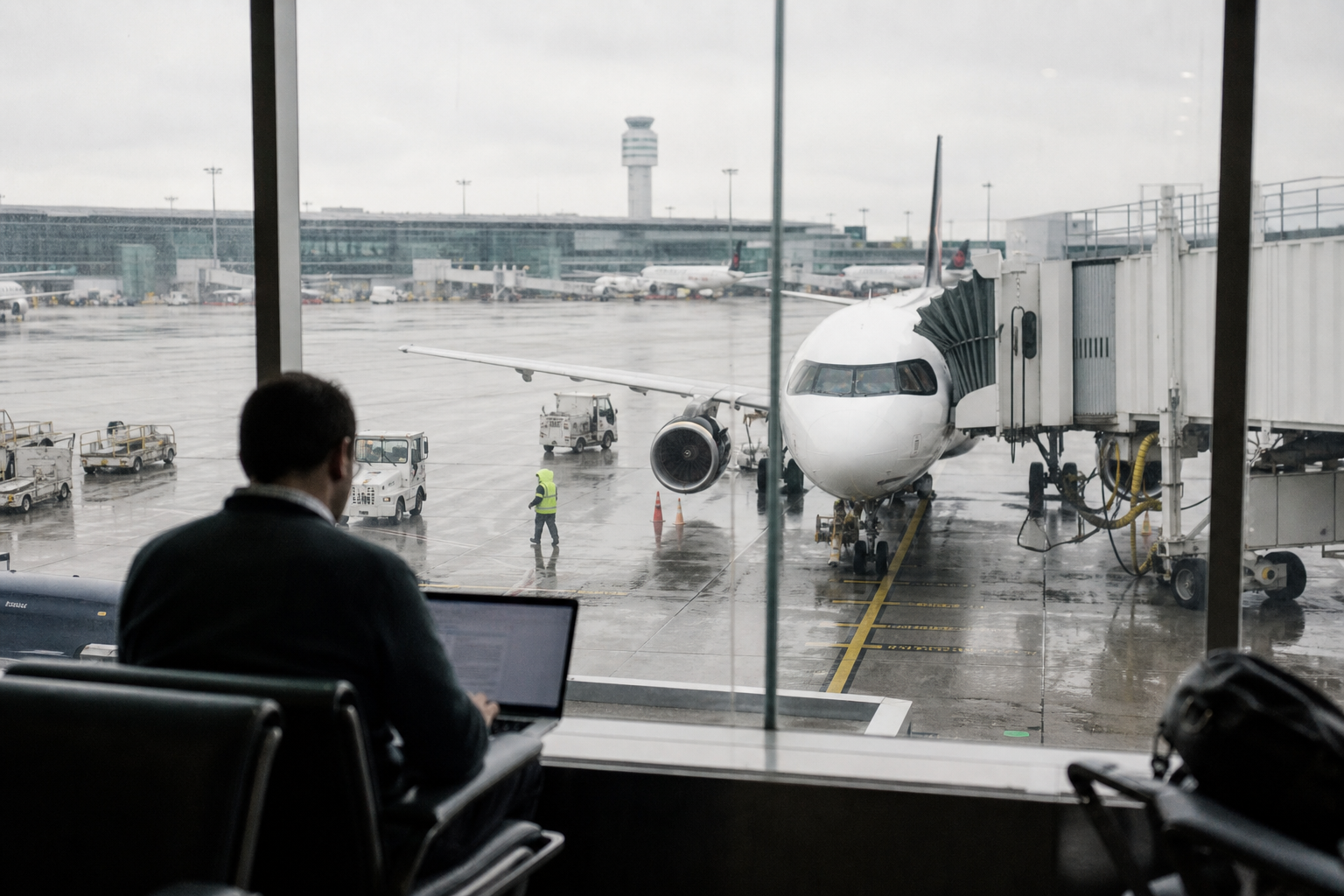

Toronto Pearson carries $7.2 billion in debt and no equity investors to share the load. Under the current non-profit authority model, every dollar of terminal expansion comes from borrowed money or passenger fees. That changes with the concession framework Mark Carney introduced in 2024, which opens Pearson, Vancouver, Montreal-Trudeau, and Calgary to private operators on 30-to-50-year lease terms. The federal government keeps the land. Investors get the cash flows.
The Mechanics: Who Pays, Who Gets Paid
A concession is not a sale. The government remains the landlord. A private consortium, most likely anchored by Canadian pension funds like CPPIB or CDPQ, pays an upfront fee for the right to operate the facility, collect landing fees, run retail concessions, and manage capital projects. The operator earns a return on invested capital, typically 8-12% for airport assets of this size. At the end of the term, operational control reverts to the government.
For the federal treasury, this is immediate cash without giving up the asset. The upfront payment can be directed to new terminals, cargo facilities, or deficit reduction. The $1.322 trillion federal deficit as of March 2026 makes that option attractive. For the operator, the appeal is straightforward: mature airports in a growing travel market with pricing power and multi-decade revenue visibility.
What Investors Gain
Private capital can move faster than a non-profit board constrained by debt covenants and federal ground-rent obligations. If Pearson needs a $3 billion terminal expansion, a concessionaire can front-load that project in year two rather than phasing it over a decade. Institutional investors, particularly pension funds, want stable, inflation-linked returns. Airport revenue, landing fees, terminal rents, parking, retail, rises with passenger volume and inflation, making it a natural fit.
The targeted investors are domestic. Canadian pension funds already own stakes in Sydney, Heathrow, and Brussels airports. This policy invites them to deploy capital at home rather than sending it offshore. If executed well, the returns stay in Canada, compounding inside pension plans that pay out to Canadian retirees.
What Taxpayers Lose
Landing fees will likely rise. A private operator answers to investors expecting double-digit returns, not to a non-profit mandate. Airlines, including WestJet and Air Canada, have already flagged this concern. Higher landing fees get passed through as higher ticket prices, and Canada's airfare is already among the most expensive in the OECD. Passengers pay more so that pension funds can hit their return targets.
Local control also shifts. Current airport authorities are governed by boards with community and business representation. A private concessionaire's decision-making authority sits with an investment committee in Toronto or New York. Expansion priorities, service levels, and fee structures get optimized for financial return rather than regional economic development.
The government's calculus assumes that private efficiency offsets these costs. The counter-argument is that airports already borrow at competitive rates. Adding an equity layer that requires 8-12% returns is inherently more expensive than a debt-only model. The trade is speed and capital access against cost.
The Structural Bet
This policy is a wager on two conditions. First, that private operators can extract more value from retail, parking, and real estate adjacencies than the current authorities, creating enough upside to justify the equity return without punitive fee increases. Second, that Canadian pension funds will bid aggressively enough to keep ownership domestic, preventing the sale of operational control to foreign institutional capital.
If landing fees rise 15-20% over five years and service quality stagnates, the model will face political pressure. If pension funds deliver stable returns and reinvest in expansions that a non-profit authority would have deferred, the bet pays. The land stays public. The risk transfers to private balance sheets. Whether taxpayers come out ahead depends on how aggressively the next operator prices access to the runways.
Read Next
The Expensive Relief of Locking in at the Top
A 4% Mortgage Qualifies at 6%: Reading the Stress Test Correctly in 2026
Economists Forecast Interest Rates as a Herd, and Borrowers Pay for the Misses
Rents Move Last: Read Employer Investment to Spot Demand 18 to 24 Months Early