Carney's Summit Targets $120 Trillion, But Canada's Infrastructure Pipeline Remains the Bottleneck
The Canada Infrastructure Bank has committed roughly $18 billion across 106 projects and holds a statutory capital envelope the government is proposing to expand to $45 billion. The pension funds being courted alongside global sovereign wealth managers hold north of $2 trillion. The gap between what the government can fund directly and what the country's productivity agenda actually requires is the entire point of September's summit in Toronto.
Mark Carney's pitch to institutional investors carrying nearly $120 trillion in assets under management is straightforward: Canada offers stable governance, a legal Net Zero 2050 target that mandates decade-long capital deployment, and pension funds that have demonstrated how to extract yield from airports and ports. What it does not yet offer is a pipeline of shovel-ready projects large enough to absorb the capital that might show up.
That mismatch explains why the summit's agenda prioritizes permitting reform over project announcements. The federal government plans to unveil streamlined approval processes for initiatives deemed of "national strategic importance," a category that now includes AI data centers requiring multi-gigawatt power supply and cross-provincial transmission corridors. Without those corridors, the energy transition remains a PowerPoint deck. Without faster permitting, the corridors remain stuck in environmental review for years while comparable U.S. projects break ground in months.
Why the Maple Eight Are Central
Canada's largest pension funds, the so-called Maple Eight, already manage more than $2 trillion combined, but only a fraction of that sits in roads, ports, power lines, and other physical assets built domestically. Their fiduciary duty is to their beneficiaries, which means Canadian projects compete on return and risk against toll roads in Chile and renewable farms in Australia. The government's de-risking strategy uses the Canada Infrastructure Bank as a first-loss capital provider, lowering downside for private equity while keeping upside intact. If a $10 billion transmission project carries government-backed downside protection, it starts to look like the inflation-linked, decades-long yield institutional portfolios are built for.
The tension is execution. Business investment in machinery and equipment grew 2.3% in Q2 2026, but Canada has trailed G7 peers in capital intensity for more than a decade. Workers here have less access to advanced equipment than their U.S. counterparts, which directly feeds the productivity stagnation Carney has anchored his economic strategy around reversing.
The AI and Energy Overlap
The summit's secondary focus, powering the data center boom, illustrates where global capital intersects domestic bottlenecks. Training large language models and running inference at scale requires power generation and transmission cables Canada does not have in volume. Hydro-Québec can generate the power, but moving it to data center corridors in southern Ontario means building transmission lines through multiple provincial jurisdictions, each with separate regulatory regimes.
Global capital has dry powder. What it lacks is conviction that Canadian projects will clear approval hurdles faster than returns decay. Sovereign wealth funds and pension giants don't invest in frameworks; they invest in contracts with clear timelines and enforceable milestones. If the summit produces permitting reform with teeth, the nearly $120 trillion in institutional capital becomes relevant. Without it, the number is aspirational and the capital stays parked in markets that already know how to move.
Carney's credibility as former Governor of the Bank of England and the Bank of Canada buys the room. The question is whether the pipeline he's selling actually exists.

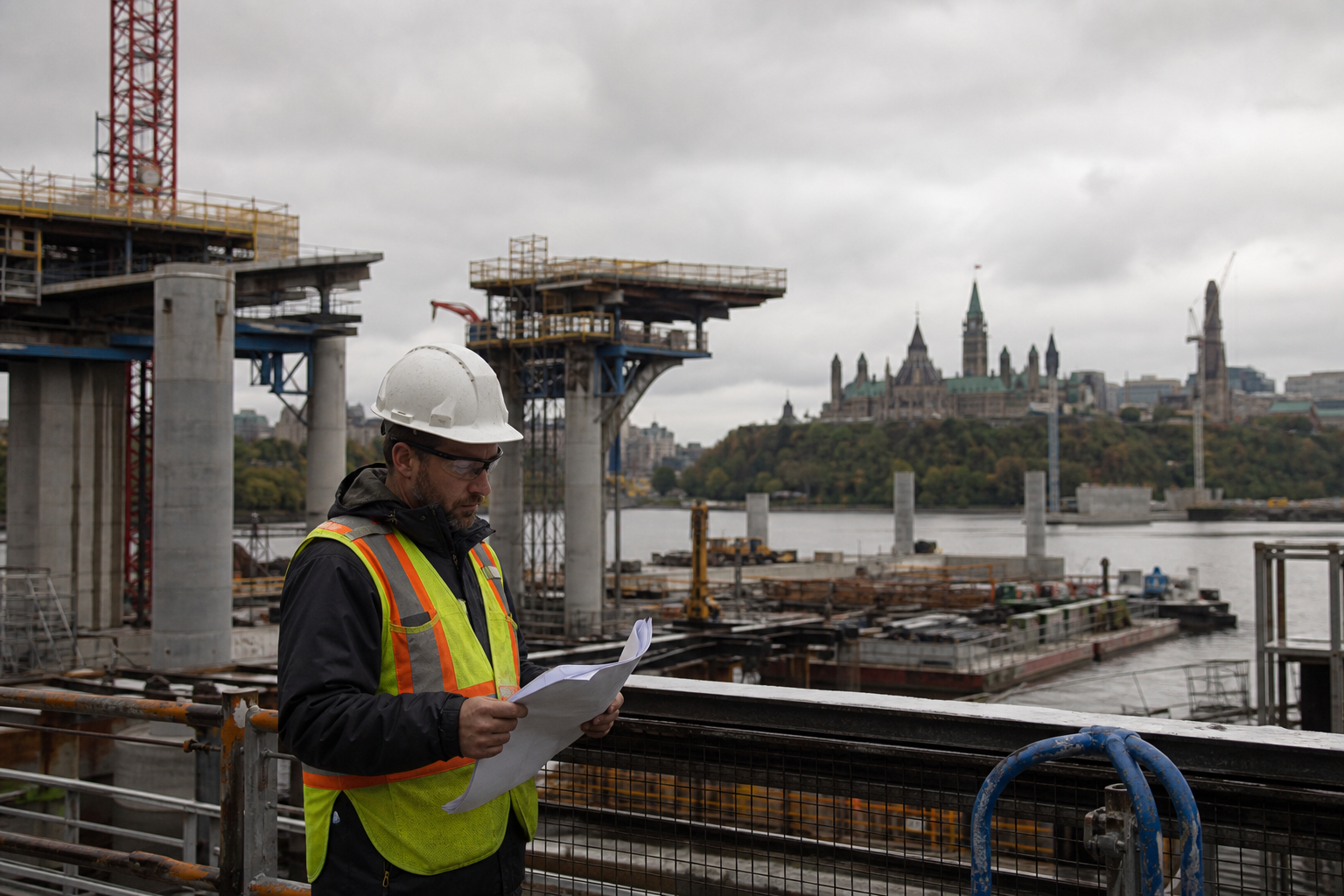

The Canada Infrastructure Bank has committed roughly $18 billion across 106 projects and holds a statutory capital envelope the government is proposing to expand to $45 billion. The pension funds being courted alongside global sovereign wealth managers hold north of $2 trillion. The gap between what the government can fund directly and what the country's productivity agenda actually requires is the entire point of September's summit in Toronto.
Mark Carney's pitch to institutional investors carrying nearly $120 trillion in assets under management is straightforward: Canada offers stable governance, a legal Net Zero 2050 target that mandates decade-long capital deployment, and pension funds that have demonstrated how to extract yield from airports and ports. What it does not yet offer is a pipeline of shovel-ready projects large enough to absorb the capital that might show up.
That mismatch explains why the summit's agenda prioritizes permitting reform over project announcements. The federal government plans to unveil streamlined approval processes for initiatives deemed of "national strategic importance," a category that now includes AI data centers requiring multi-gigawatt power supply and cross-provincial transmission corridors. Without those corridors, the energy transition remains a PowerPoint deck. Without faster permitting, the corridors remain stuck in environmental review for years while comparable U.S. projects break ground in months.
Why the Maple Eight Are Central
Canada's largest pension funds, the so-called Maple Eight, already manage more than $2 trillion combined, but only a fraction of that sits in roads, ports, power lines, and other physical assets built domestically. Their fiduciary duty is to their beneficiaries, which means Canadian projects compete on return and risk against toll roads in Chile and renewable farms in Australia. The government's de-risking strategy uses the Canada Infrastructure Bank as a first-loss capital provider, lowering downside for private equity while keeping upside intact. If a $10 billion transmission project carries government-backed downside protection, it starts to look like the inflation-linked, decades-long yield institutional portfolios are built for.
The tension is execution. Business investment in machinery and equipment grew 2.3% in Q2 2026, but Canada has trailed G7 peers in capital intensity for more than a decade. Workers here have less access to advanced equipment than their U.S. counterparts, which directly feeds the productivity stagnation Carney has anchored his economic strategy around reversing.
The AI and Energy Overlap
The summit's secondary focus, powering the data center boom, illustrates where global capital intersects domestic bottlenecks. Training large language models and running inference at scale requires power generation and transmission cables Canada does not have in volume. Hydro-Québec can generate the power, but moving it to data center corridors in southern Ontario means building transmission lines through multiple provincial jurisdictions, each with separate regulatory regimes.
Global capital has dry powder. What it lacks is conviction that Canadian projects will clear approval hurdles faster than returns decay. Sovereign wealth funds and pension giants don't invest in frameworks; they invest in contracts with clear timelines and enforceable milestones. If the summit produces permitting reform with teeth, the nearly $120 trillion in institutional capital becomes relevant. Without it, the number is aspirational and the capital stays parked in markets that already know how to move.
Carney's credibility as former Governor of the Bank of England and the Bank of Canada buys the room. The question is whether the pipeline he's selling actually exists.
Sources
Read Next
Asset managers cut product portfolios to fund AI and outsourcing overhauls
ETFs now hold 42% of Canadian fund assets as OSC tightens crypto and liquidity rules
One in Five Canadian Parents Still Pays Bills for Kids in Their Late Thirties
Joint mortgages surge in Ontario and B.C. as first-time buyers face rising delinquency pressure