CMHC Revised 2030 Housing Gap to 3.5 Million Additional Units: The Word That Changes Your Next Move
The 3.5 million figure you've been hearing since 2023 was the shortfall on top of what the market was already expected to deliver. Canada was on track to build roughly 2.3 million units by 2030 under business-as-usual conditions. The CMHC said so in its original report, and most of the coverage ignored it.
Here's what that distinction does to the math. Canada was on track to build roughly 2.3 million units by 2030 under business-as-usual conditions. Add the 3.5 million additional units CMHC flagged, and the real target is 5.8 million total units. That means more than doubling current construction velocity in a country already running out of electricians.
The word "additional" wasn't new. The reporting was.
Why the Distinction Matters Now
If you're sitting on the fence about buying in 2026, the corrected figure changes the waiting game. The original framing suggested Canada was 3.5 million units short, which sounded bad but fixable. The actual requirement is 5.8 million units in four years, which is a construction pace Canada has never sustained, not even during the postwar boom. Labour shortages alone make it unlikely. According to CMHC's September 2023 report, a significant portion of the residential construction workforce is nearing retirement, and the skilled trades pipeline is not replacing them.
That supply constraint keeps upward pressure on prices, especially in Ontario and British Columbia, which together represent roughly 60% of the national gap. A Vancouver West detached home sits between $1.78 million and $1.82 million as of August 2026. Waiting for supply to flood the market and collapse prices assumes a construction surge that doesn't exist yet.
The Rent-or-Buy Calculus Shifts
For renters banking on a wave of new inventory to improve affordability, the timeline just extended. Purpose-built rental construction is slower than single-family builds, and a large chunk of that 5.8 million target must be rental stock to address the segment of the population priced out of ownership entirely. Kelowna saw its rental vacancy rate jump from 3.8% to 6.4% year-over-year as of December 2025, but that pattern hasn't replicated in the country's most expensive markets.
If you're targeting a purchase before rates drop further, the CMHC insured mortgage limit now extends to properties valued up to $1.5 million as of January 2026. That opens access in markets where the median detached home price exceeds what the old $1 million cap covered. The insurance premium on the portion above $500,000 is 10%, which adds to upfront costs but removes the 20% down payment barrier.
The Prefab Gamble
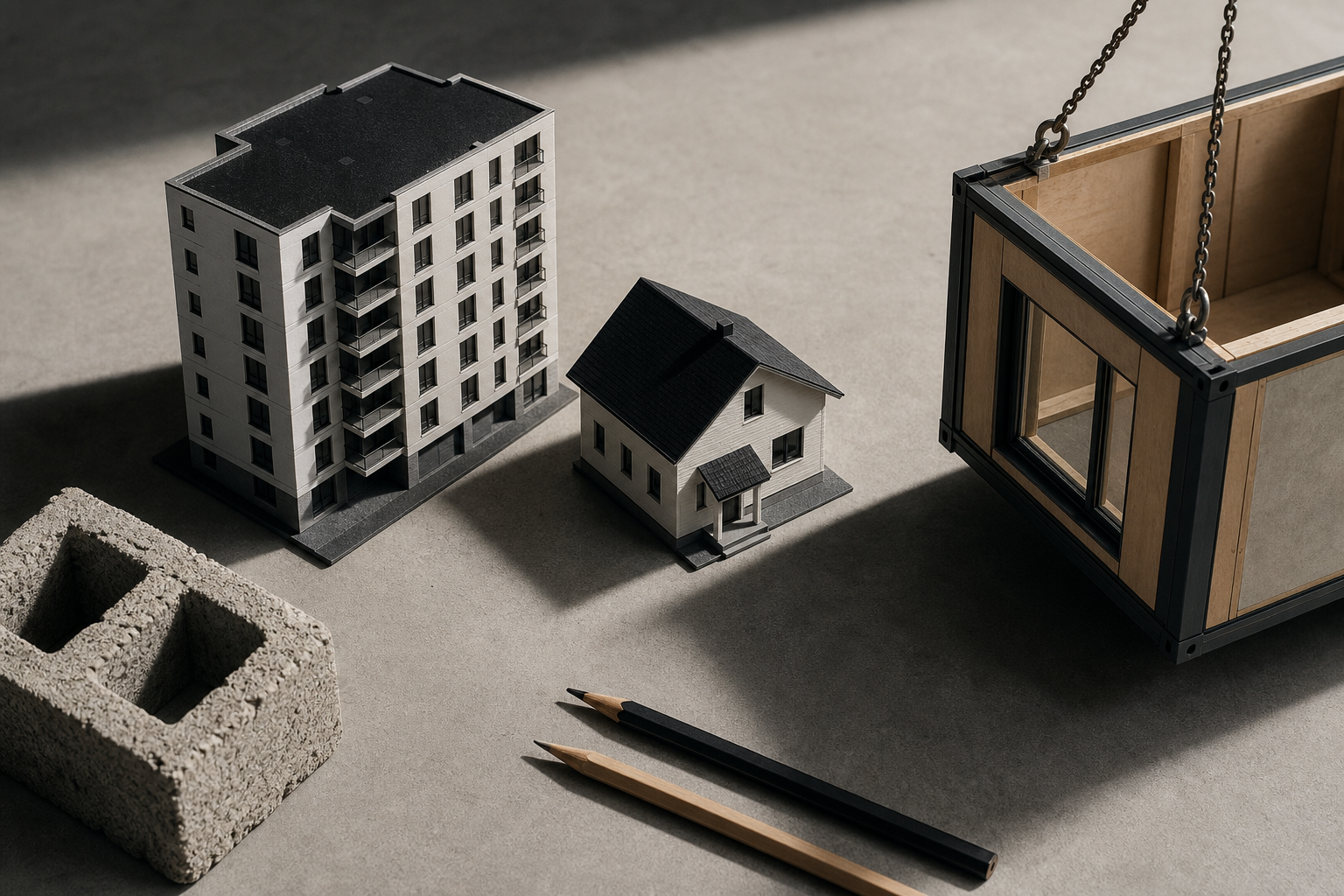
To hit 5.8 million units, the industry must industrialize. Stick-built construction cannot scale at the required velocity. Modular and prefabricated housing bypasses some of the labour bottleneck, but it introduces quality variance and resale risk. A modular townhouse in Brampton sells for less per square foot than a traditionally built comparable, and that discount persists even when the build quality is identical. Buyers treat prefab as a discount asset class.
If the government pushes prefab to close the gap, early adopters get cheaper entry prices but take resale uncertainty. Later buyers face a market where prefab is normalized, which could compress or eliminate the discount. The bet is on timing and volume.
What Changed and What Didn't
The target year remains 2030. The affordability benchmark remains 2003-2004 levels, when a median-income household could afford a median-priced home in most Canadian markets. What changed is the clarity around the scale of the shortfall. The 3.5 million figure was the deficit. The total build target was 5.8 million.
That correction doesn't make the problem worse. It makes the timeline longer and the odds of a supply-driven price correction lower. If you were waiting for housing to become affordable through supply alone, the wait just extended past 2030.


The 3.5 million figure you've been hearing since 2023 was the shortfall on top of what the market was already expected to deliver. Canada was on track to build roughly 2.3 million units by 2030 under business-as-usual conditions. The CMHC said so in its original report, and most of the coverage ignored it.
Here's what that distinction does to the math. Canada was on track to build roughly 2.3 million units by 2030 under business-as-usual conditions. Add the 3.5 million additional units CMHC flagged, and the real target is 5.8 million total units. That means more than doubling current construction velocity in a country already running out of electricians.
The word "additional" wasn't new. The reporting was.
Why the Distinction Matters Now
If you're sitting on the fence about buying in 2026, the corrected figure changes the waiting game. The original framing suggested Canada was 3.5 million units short, which sounded bad but fixable. The actual requirement is 5.8 million units in four years, which is a construction pace Canada has never sustained, not even during the postwar boom. Labour shortages alone make it unlikely. According to CMHC's September 2023 report, a significant portion of the residential construction workforce is nearing retirement, and the skilled trades pipeline is not replacing them.
That supply constraint keeps upward pressure on prices, especially in Ontario and British Columbia, which together represent roughly 60% of the national gap. A Vancouver West detached home sits between $1.78 million and $1.82 million as of August 2026. Waiting for supply to flood the market and collapse prices assumes a construction surge that doesn't exist yet.
The Rent-or-Buy Calculus Shifts
For renters banking on a wave of new inventory to improve affordability, the timeline just extended. Purpose-built rental construction is slower than single-family builds, and a large chunk of that 5.8 million target must be rental stock to address the segment of the population priced out of ownership entirely. Kelowna saw its rental vacancy rate jump from 3.8% to 6.4% year-over-year as of December 2025, but that pattern hasn't replicated in the country's most expensive markets.
If you're targeting a purchase before rates drop further, the CMHC insured mortgage limit now extends to properties valued up to $1.5 million as of January 2026. That opens access in markets where the median detached home price exceeds what the old $1 million cap covered. The insurance premium on the portion above $500,000 is 10%, which adds to upfront costs but removes the 20% down payment barrier.
The Prefab Gamble
To hit 5.8 million units, the industry must industrialize. Stick-built construction cannot scale at the required velocity. Modular and prefabricated housing bypasses some of the labour bottleneck, but it introduces quality variance and resale risk. A modular townhouse in Brampton sells for less per square foot than a traditionally built comparable, and that discount persists even when the build quality is identical. Buyers treat prefab as a discount asset class.
If the government pushes prefab to close the gap, early adopters get cheaper entry prices but take resale uncertainty. Later buyers face a market where prefab is normalized, which could compress or eliminate the discount. The bet is on timing and volume.
What Changed and What Didn't
The target year remains 2030. The affordability benchmark remains 2003-2004 levels, when a median-income household could afford a median-priced home in most Canadian markets. What changed is the clarity around the scale of the shortfall. The 3.5 million figure was the deficit. The total build target was 5.8 million.
That correction doesn't make the problem worse. It makes the timeline longer and the odds of a supply-driven price correction lower. If you were waiting for housing to become affordable through supply alone, the wait just extended past 2030.
Read Next
Asset managers cut product portfolios to fund AI and outsourcing overhauls
ETFs now hold 42% of Canadian fund assets as OSC tightens crypto and liquidity rules
One in Five Canadian Parents Still Pays Bills for Kids in Their Late Thirties
Joint mortgages surge in Ontario and B.C. as first-time buyers face rising delinquency pressure