Laneway Homes in Canada: A $250,000 Build That May Never Break Even
A 600-square-foot laneway suite in Toronto's west end went up in 2023 for $485,000, not counting the $52,000 the owner spent on permit fees, engineering reports, and architectural drawings before construction started. Monthly rent: $2,100. That's a 4.7% gross yield before maintenance, property taxes, or the HELOC interest used to finance it. After costs, the real return is closer to 2%, which is what a GIC paid that year with zero construction risk.
The math isn't working the way most homeowners expect it to.
The Cost Structure Nobody Warns You About
Start with the base construction number. A turnkey laneway build in Vancouver, Toronto, or Ottawa runs $350,000 to $550,000 as of mid-2026, depending on site conditions and finishes. That's the shovel-to-occupancy figure. Before the shovel, you're spending $30,000 to $60,000 on development charges, permits, and design work. A typical 650-square-foot unit with mid-range finishes lands around $450,000 all-in. That's $692 per square foot, which is roughly double what you'd pay per square foot to build new construction in a greenfield subdivision.
Why the premium? Confined backyard access. Most laneways require craning in materials over the main house or running everything through a narrow side yard. Trades charge accordingly. Then there's the utility hookup problem. A laneway home pulls water and sewer through the main house's existing service line, which in older Toronto and Vancouver neighborhoods was sized for a single dwelling. Upgrading that connection to municipal standards often adds $15,000 to $25,000 before you pour a footer.
And the soft costs keep stacking. Property tax reassessment is automatic once the unit is built. Homeowners routinely see their annual tax bill jump $3,000 to $5,000, since the municipality now values the lot as if it contains two dwellings. Most people budget for construction. Almost nobody budgets for the permanent tax increase.
Rental Income vs. Liquidity
The typical laneway rental in a major Canadian market pulls $1,800 to $2,400 per month for a one-bedroom unit. Call it $2,000. Over a year, that's $24,000 gross. Subtract property tax increase ($4,000), maintenance reserve ($1,200), insurance increase ($800), and HELOC interest on $450,000 at 6.5% ($29,250). You're underwater by $11,250 annually.
The counterargument is that you're paying down the HELOC with rental income, building equity over time. True. But the equity is trapped. A laneway home cannot be sold separately from the main house in most jurisdictions. If you need liquidity, your only move is to sell the entire property or refinance again. Unlike a condo you can flip or a basement suite you can finish for $60,000, a laneway build is a permanent alteration with low exit flexibility.
The appraisal gap makes it worse. A $450,000 construction cost does not mean the property's market value rises by $450,000. In practice, appraisers add $250,000 to $350,000 in value, because the buyer market for properties with laneway homes is thinner than for standard single-family lots. You've spent $450,000 to create $300,000 in value. That's not an investment. That's expensive housing.
When It Works
Three cases where the math improves. First, if you're building for family, not tenants, housing an aging parent or an adult child who otherwise couldn't afford to stay local. The value isn't financial; it's keeping people close without expanding the main house footprint.
Second, if construction costs drop below $300,000 because you're in a smaller market (Ottawa, Winnipeg) or you're acting as your own general contractor and can source trades directly. At $300,000 all-in with $2,000 monthly rent, the yield starts approaching breakeven after costs.
Third, if you're holding the property for 20+ years and rents rise faster than property taxes and maintenance. At a 3% annual rent increase, that $2,000 becomes $3,200 by year 15. The yield improves. But you're betting on a long horizon in a single asset with no diversification.
For most homeowners, a laneway home is a $450,000 build that adds $300,000 in value and generates $24,000 in rent against $35,000 in annual carrying costs. It's not breaking even. It's buying housing for someone else at a steep discount to yourself.

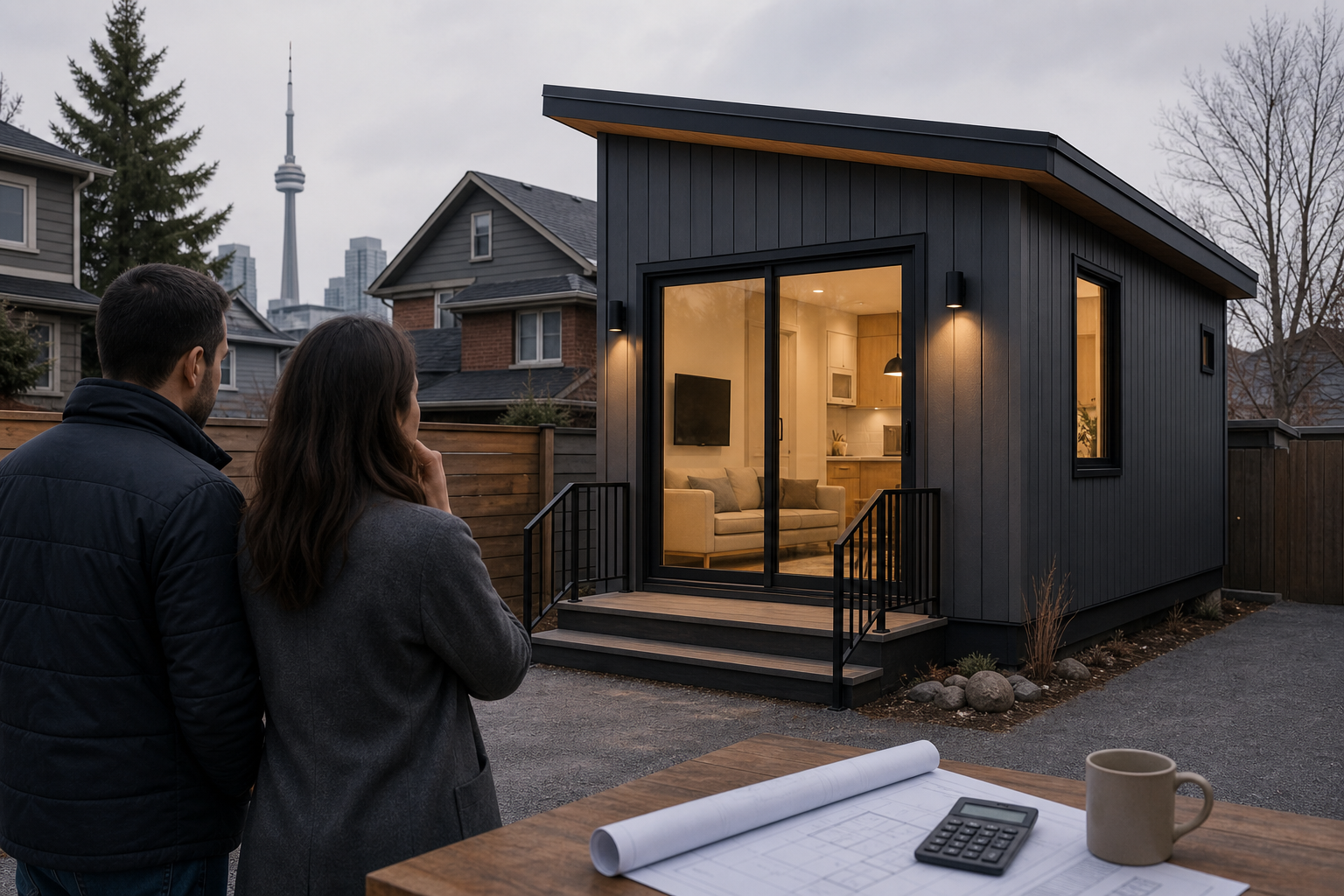

A 600-square-foot laneway suite in Toronto's west end went up in 2023 for $485,000, not counting the $52,000 the owner spent on permit fees, engineering reports, and architectural drawings before construction started. Monthly rent: $2,100. That's a 4.7% gross yield before maintenance, property taxes, or the HELOC interest used to finance it. After costs, the real return is closer to 2%, which is what a GIC paid that year with zero construction risk.
The math isn't working the way most homeowners expect it to.
The Cost Structure Nobody Warns You About
Start with the base construction number. A turnkey laneway build in Vancouver, Toronto, or Ottawa runs $350,000 to $550,000 as of mid-2026, depending on site conditions and finishes. That's the shovel-to-occupancy figure. Before the shovel, you're spending $30,000 to $60,000 on development charges, permits, and design work. A typical 650-square-foot unit with mid-range finishes lands around $450,000 all-in. That's $692 per square foot, which is roughly double what you'd pay per square foot to build new construction in a greenfield subdivision.
Why the premium? Confined backyard access. Most laneways require craning in materials over the main house or running everything through a narrow side yard. Trades charge accordingly. Then there's the utility hookup problem. A laneway home pulls water and sewer through the main house's existing service line, which in older Toronto and Vancouver neighborhoods was sized for a single dwelling. Upgrading that connection to municipal standards often adds $15,000 to $25,000 before you pour a footer.
And the soft costs keep stacking. Property tax reassessment is automatic once the unit is built. Homeowners routinely see their annual tax bill jump $3,000 to $5,000, since the municipality now values the lot as if it contains two dwellings. Most people budget for construction. Almost nobody budgets for the permanent tax increase.
Rental Income vs. Liquidity
The typical laneway rental in a major Canadian market pulls $1,800 to $2,400 per month for a one-bedroom unit. Call it $2,000. Over a year, that's $24,000 gross. Subtract property tax increase ($4,000), maintenance reserve ($1,200), insurance increase ($800), and HELOC interest on $450,000 at 6.5% ($29,250). You're underwater by $11,250 annually.
The counterargument is that you're paying down the HELOC with rental income, building equity over time. True. But the equity is trapped. A laneway home cannot be sold separately from the main house in most jurisdictions. If you need liquidity, your only move is to sell the entire property or refinance again. Unlike a condo you can flip or a basement suite you can finish for $60,000, a laneway build is a permanent alteration with low exit flexibility.
The appraisal gap makes it worse. A $450,000 construction cost does not mean the property's market value rises by $450,000. In practice, appraisers add $250,000 to $350,000 in value, because the buyer market for properties with laneway homes is thinner than for standard single-family lots. You've spent $450,000 to create $300,000 in value. That's not an investment. That's expensive housing.
When It Works
Three cases where the math improves. First, if you're building for family, not tenants, housing an aging parent or an adult child who otherwise couldn't afford to stay local. The value isn't financial; it's keeping people close without expanding the main house footprint.
Second, if construction costs drop below $300,000 because you're in a smaller market (Ottawa, Winnipeg) or you're acting as your own general contractor and can source trades directly. At $300,000 all-in with $2,000 monthly rent, the yield starts approaching breakeven after costs.
Third, if you're holding the property for 20+ years and rents rise faster than property taxes and maintenance. At a 3% annual rent increase, that $2,000 becomes $3,200 by year 15. The yield improves. But you're betting on a long horizon in a single asset with no diversification.
For most homeowners, a laneway home is a $450,000 build that adds $300,000 in value and generates $24,000 in rent against $35,000 in annual carrying costs. It's not breaking even. It's buying housing for someone else at a steep discount to yourself.
Read Next
Asset managers cut product portfolios to fund AI and outsourcing overhauls
ETFs now hold 42% of Canadian fund assets as OSC tightens crypto and liquidity rules
One in Five Canadian Parents Still Pays Bills for Kids in Their Late Thirties
Joint mortgages surge in Ontario and B.C. as first-time buyers face rising delinquency pressure